Starting a Career as a Gen Z Graduate in the Age of AI
When I received my diploma, I did not expect that finding a job would be at least as challenging as the years spent studying. Yet, as a recent graduate, securing employment is… particularly difficult…
Gen Z and the “Entry-Level Paradox”
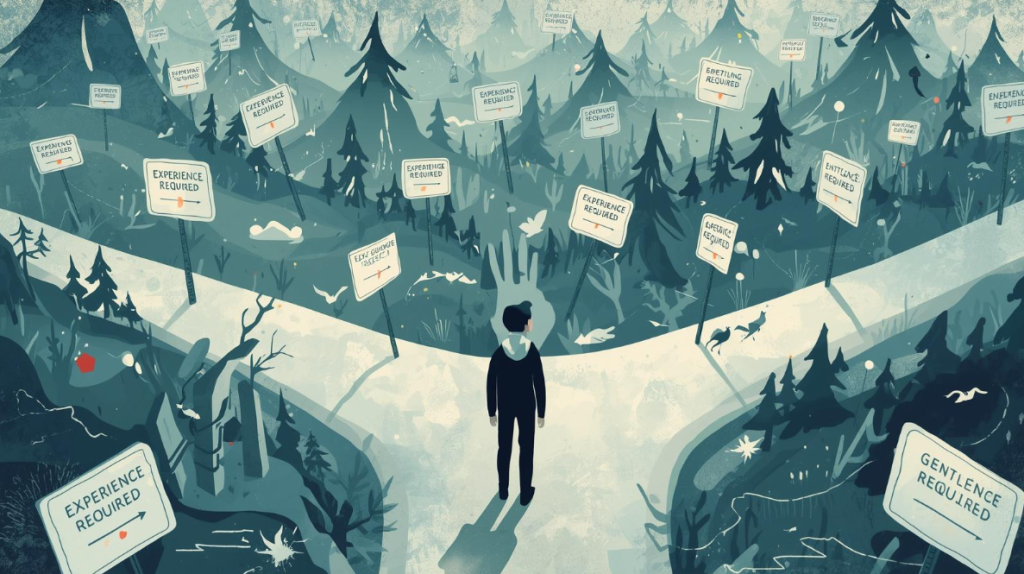
I quickly encountered the so-called “entry-level paradox,” where even junior positions require 1–3 years of experience. The issue is simple: as a fresh graduate, I am repeatedly rejected for lacking sufficient experience for roles that, ideally, should be designed specifically for beginners. And my experience is far from unique. If young people from Generation Z are not given the opportunity to prove themselves, gain experience, and develop, then in the long term — 10 to 20 years from now — there will be a shortage of mid-level and senior professionals.
Although this is not a new problem, AI has made the situation even more challenging. For a modest monthly subscription fee, it can perform, at a reasonably good level, tasks that an assistant would otherwise carry out for significantly higher wages. However, there is something artificial intelligence cannot incorporate into its probability-based responses: human intuition and emotion. The ability to sense what might work and what might not, and to recognize what is truly engaging.
The Strengths of Generation Z
Generation Z holds immense potential: we adapt quickly, learn new skills with ease, manage multiple tasks simultaneously, efficiently identify what truly matters, and remain flexible. Perhaps most importantly — especially in the field of communications — we grew up on social media. This is a platform that continues to grow, with more companies recognizing its potential, as traditional channels are no longer reaching sufficient audiences. Over time, this shift will only intensify in favor of social media: starting with Generation Z, media consumption largely consists of such content, while long-form articles capture the attention of fewer people. And who understands current trends, algorithms, influencers, and what truly counts as authentic? Exactly.
How to Work Effectively with Generation Z
It is understandable if other generations approach Gen Z with some hesitation. We have only recently entered the labor market, and we are somewhat different: we simultaneously live in our own, somewhat closed worlds while also embodying the symbols of a globalized society. We can appear unserious at times (just think of the “WW3 outfit” trend), yet we are full of motivation and dreams for which we are willing to work hard. We seek quick wins, but at the same time, we aim to build meaningful, stable careers in the long run.
Working with Generation Z is not complicated, but it does require awareness. Continuous, honest feedback is essential, as is understanding the “why”: when we see that our work has a real impact, we become far more motivated. We also value having the space to bring our ideas to life — even if it means occasionally making mistakes along the way.
Not Competition, but Collaboration
This is not about one generation being better than another; it is about having different strengths. If we treat this not as a competition but as an opportunity, collaboration can amplify the advantages of each generation.
In the near future, further topics related to Generation Z will be featured here on the IdeaBank blog.